Passivhaus
The Ascot Passivhaus, designed and built by Allan Hocking of Hocking Homes Pty Ltd, brings together the best of Passivhaus and Passive Solar principles to create a high-performance, climate-responsive home in Victoria’s Goldfields.
Unlike traditional Passive Solar homes that rely on orientation, Passivhaus design uses precise calculations and performance-based standards to ensure exceptional energy-efficiency regardless of direction. At Ascot, both approaches work in harmony—achieving optimal comfort, reduced energy use, and maximum seasonal performance.


Airtight and
Windtight Layers
One of the most important principles of Passivhaus design is airtight and windtight construction. If a building isn’t airtight, even the best insulation becomes ineffective. Gaps and cracks allow unwanted air movement, leading to heat loss, condensation, and mold growth. Passive Houses use vapour-permeable airtight layers that block air but allow water vapour to escape, safeguarding the structure from moisture damage.
An airtight home keeps the internal environment stable, enhances energy-efficiency, and significantly improves indoor air quality when paired with a ventilation system like MVHR. It also extends the lifespan of building materials by preventing hidden moisture issues.
In Australia, the National Construction Code (NCC) mandates performance requirements, verified through air permeability testing. A Passivhaus must achieve less than 0.6 air changes per hour at 50 Pascals pressure, tested with a Blower Door.
For this project, Pro Clima products were used to create a robust airtight envelope. Proper installation is crucial — mistakes like tears, gaps, or incomplete sealing can lead to expensive energy losses.
Airtightness is not optional; it is the foundation for true high-performance homes, providing energy savings, health benefits, and long-term structural protection.

Insulation
Superior insulation is critical to Passivhaus success. It’s not just about stuffing walls — it’s about continuous, high-performance insulation that wraps the entire home, including junctions between walls, roofs, and floors. There can be no breaks, gaps, or weaknesses in the thermal barrier.
Correct insulation installation prevents heat loss in winter and heat gain in summer, maintaining a comfortable indoor temperature without the need for large mechanical systems. This results in lower upfront system costs and significant lifetime energy savings.
Passivhaus designs calculate insulation needs based on local climate data, ensuring the correct R-values are achieved. Every layer, from floors to roof, is assessed for performance.
Benefits of excellent insulation include improved energy-efficiency, better soundproofing, reduced condensation and mold, a smaller environmental footprint, and even increased property value. Importantly, homes built to the Passivhaus standard have these insulation levels inspected and verified — unlike typical constructions where insulation quality can vary greatly.
Getting insulation right is essential to achieving genuine thermal comfort and low energy bills. In a Passivhaus, insulation isn’t an afterthought — it’s the cornerstone of comfort, health, and sustainability.

Windows and Doors
Windows and doors are often the weak points in any building’s thermal envelope — but in a Passivhaus, they’re engineered for maximum performance. The project features triple-glazed windows and doors, manufactured in Europe and tested to Australian standards.
The frames are made from sustainably harvested pine, offering natural insulation, with a durable aluminium exterior to withstand the elements. The glass units use two layers of Low-Emissivity (Low-E) coatings, which dramatically improve insulation while allowing plenty of natural light.
In Passivhaus construction, windows and doors must achieve a low U-value (a measure of heat transfer) and be installed with airtight seals. The triple-glazing ensures superior thermal performance, enabling residents to experience natural beauty year-round without drafts or discomfort.
Low-E glass helps by reducing heat transfer, blocking harmful UV rays, and lowering energy bills. This project sourced its glazing from Logikhaus, known for high-performance, sustainable products.
Windows and doors in a Passivhaus are not just about looks; they are critical components in ensuring energy-efficiency, comfort, and indoor air quality. Properly specified and installed, they allow Passive Houses to achieve their outstanding thermal performance.

Thermal Bridges
Thermal bridges are the hidden enemies of energy-efficient buildings. They are areas where heat flows more easily through the building envelope — typically through poorly designed junctions, window frames, balconies, or penetrations for pipes and cables.
In Passivhaus design, thermal bridges must be eliminated wherever possible right from the design stage. They can lead to significant heat loss, higher energy bills, condensation problems, and mold growth, ultimately compromising the building’s comfort and durability.
Typical thermal bridges include:
-
Wall-to-floor junctions (especially slab edges)
-
Roof-to-wall connections
-
Window and door frames
-
Penetrations for pipes and vents
-
Balconies without proper thermal breaks
Thermal bridges don’t just affect energy use; they also create uncomfortable cold spots, making indoor spaces feel drafty even if heating is running.
Addressing thermal bridging often requires specialized materials, like insulated structural components, and careful detailing at every junction.
By designing out thermal bridges, Passivhaus buildings achieve consistent insulation performance across the whole structure, ensuring maximum thermal comfort, energy savings, and longer building life.
No corner can be forgotten — because every bridge is a lost opportunity for efficiency.

MVHR
(Mechanical Ventilation and Heat Recovery)
An airtight house needs a way to breathe — and that’s where Mechanical Ventilation and Heat Recovery comes in (MVHR). It’s not just a luxury; it’s a necessity for Passivhaus projects. Without it, air quality would deteriorate, moisture would build up, and both the occupants’ health and the structure’s integrity would be compromised.
MVHR systems provide a constant supply of fresh, filtered air while recovering the heat from outgoing stale air. This dramatically improves energy-efficiency — fresh air comes in already pre-warmed or pre-cooled, depending on the season, reducing the load on heating and cooling systems.
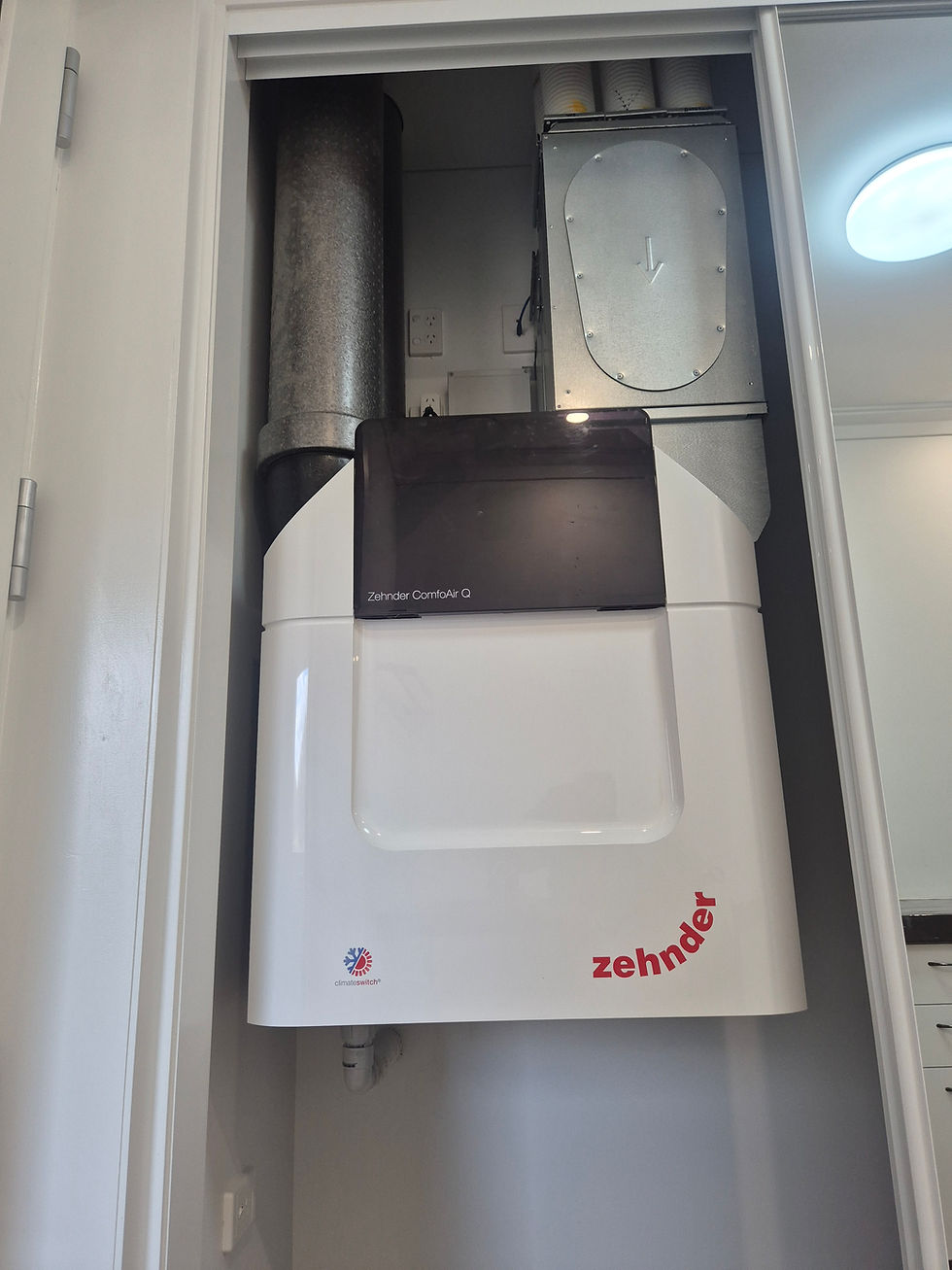
The system used in this project was the ComfoAir Q350 by Fantech, a proven performer in energy recovery ventilation. MVHR also controls humidity, preventing condensation, mold, and moisture-related damage.
Other key benefits include removing allergens, pollen, and dust, improving occupant health, and ensuring a consistently comfortable indoor climate throughout the year.
Without a well-functioning MVHR system, even a perfectly airtight house could become uncomfortable and unhealthy. In Passivhaus design, MVHR is critical to ensuring that energy savings do not come at the cost of human health or comfort.
Verification
Obtaining Passivhaus Certification guarantees your house (or commercial building) achieves the desired energy efficiency, comfort and health benefits when it is built to the Passivhaus Standard.
Construction is independently monitored and reviewed throughout the process from design, construction stages, through to completion ensuring the completed building will preform as it was designed to do.
Certification ensures confidence to building owners and occupants that the building is built meeting the specific standards of Passivhaus.
Thermal comfort maintained during winter with 20°C minimum, in summer no more than10% of year over 25°C.
• Heating and Cooling energy demand < 15kWh/m2/year
• Humidity must not exceed 12g/kg for more than 20% of the year
• Airtightness must be at maximum 0.6 ACH 50 for new builds or 1.0 ACH 50 for retrofits.
• Primary Energy use must not exceed 60kWh/m2/year.
Certifying your Passivhaus and adding it to the international list of certified buildings is a significant step in promoting sustainability.
On this project:
Energy Consultant:
Cameron Munro. Passive Analytics
Certifier:
Luc Plowman. Detail Green

